

MedTech teams are under pressure to hit the next milestone without creating more regulatory or delivery risk. Investor timelines are getting tighter, and regulatory expectations still have to be built into the work. Moreover, the gap between what the core team can carry and what the milestone requires continues to widen.
The bigger issue is that each trend creates an execution problem for small and mid-sized MedTech teams. As a MedTech staffing company that regularly reviews trends, we have collated the *four areas that serious MedTech teams are building around in 2026 . We also explain why execution capacity may decide whether the next milestone stays on track.
For founders and technical leads, the question is whether your team has enough engineering capacity to build the right product without slowing the milestone.
1. AI-enabled diagnostics create data and validation pressure
AI is becoming a bigger part of diagnostic products, but the hard part is that AI is beyond building a model. For MedTech teams, the harder work is turning that model into a reliable product that fits clinical workflows, documented development processes, and regulatory expectations.
AI may support imaging workflows, triage, clinical decision support, and high-volume data analysis. But these systems only create value when the data, workflow, validation approach, and documentation are strong enough to support the product.

In 2026, serious teams are moving beyond point demos. They need AI features that can be integrated into device ecosystems and evaluated with the same discipline as the rest of the product.
What teams are building:
- Imaging workflow assistants
- AI-based triage tools for remote or high-volume clinical settings
- Decision-support platforms built around real-world evidence and clinical data
Execution challenges:
An AI diagnostic build usually requires model development, data pipelines, clinical workflow integration, and documentation discipline to work together. The execution risk sits in data readiness, annotation quality, traceability, verification planning, privacy requirements, and regulatory clarity. If the data and validation plan are weak, the model can become a milestone risk instead of a product advantage.
Real-world signal: FDA's AI-enabled medical device list shows AI moving into authorized medical devices across areas such as radiology and cardiovascular diagnostics. FDA, Health Canada, and Medicines and Healthcare products Regulatory Agency (MHRA) also point to GMLP principle 7, which focuses on the performance of the “human-AI team.” The practical insight is that the model is only one part of the product.
2. Wearable biosensors put firmware, connectivity, and verification under pressure
Wearable biosensors are still one of the clearest examples of why MedTech execution is difficult. The product may look simple on the outside, but the work depends on the firmware, connectivity, data quality, power management, clinical usability, and verification all working together.
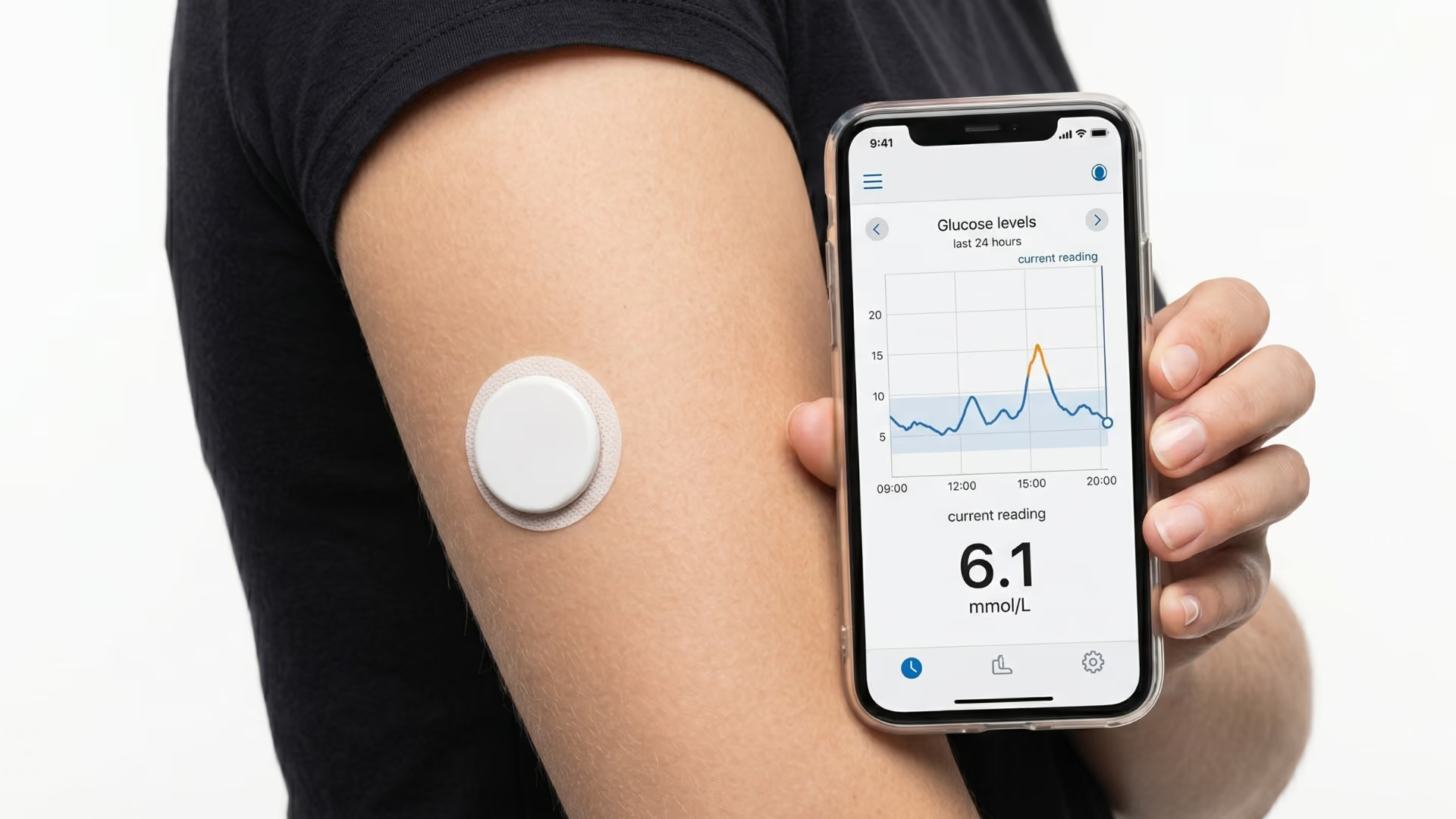
For investor-backed teams, collecting data is only the first proof point. The harder milestone is demonstrating that the system can reliably collect the right data, move it securely, and support clinical or product decisions without creating new workflow problems.
What teams are building:
- Patch-based wearables for glucose, cardiac, or multi-parameter monitoring
- Motion sensors for rehabilitation, fall risk, and post-operative recovery
- Connected biosensor platforms for remote chronic disease management
Execution challenges:
Wearable builds require tight coordination among embedded firmware, Bluetooth Low Energy, cloud-side data pipelines, mobile interfaces, and verification. Design controls, safety requirements, cybersecurity, and documentation need to be informed early in the work. It becomes challenging when these workstreams are treated separately.
Real-world signal: FDA's digital health technology guidance treats remote data acquisition as a hardware and software problem. For wearable teams, that is the point. Sensor data must be reliable enough for clinical workflow, and the system must make it usable without adding work for the care team.
3. Remote patient monitoring tests reliability outside the clinic
Remote patient monitoring (RPM) continues to expand across chronic care, post-surgical recovery, and decentralized clinical trials. The opportunity is there, but the execution challenge is equally clear: the system must work once it leaves the clinic's controlled environment.
That means RPM is more than a device challenge. It is a full-system reliability problem. Firmware, wireless connectivity, cloud infrastructure, patient data, alerts, clinical dashboards, cybersecurity, validation, and documentation must all remain aligned.
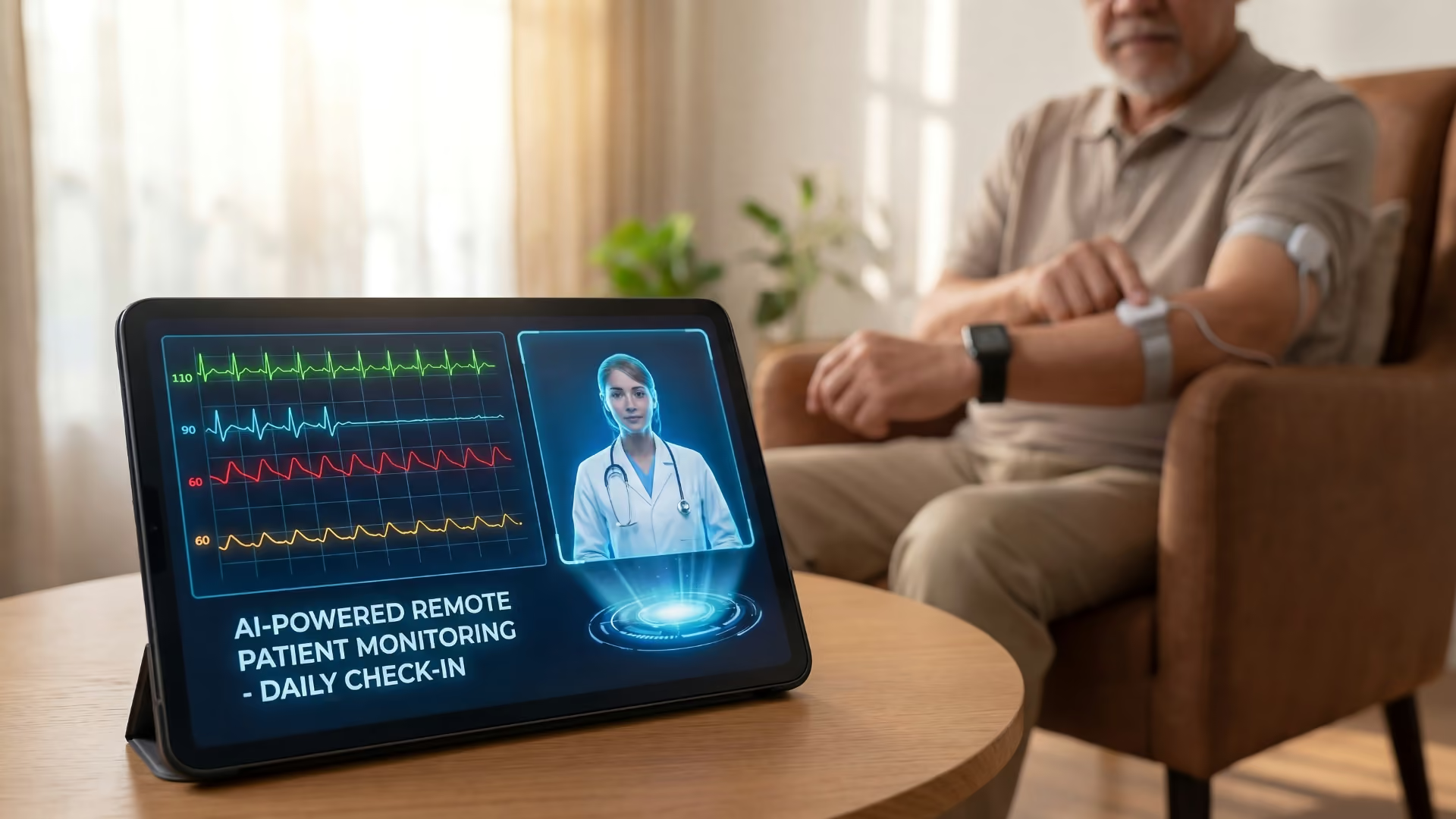
If one part falls behind, the product can create workflow friction for clinicians or reliability concerns for patients.
What teams are building:
- Home-based vitals monitoring kits connected to clinical dashboards
- Connected inhalers, spirometers, and other devices with mobile data integration
- Post-surgical recovery tools with alerts, escalation logic, and remote care workflows
Execution challenges:
RPM builds often involve device firmware, Bluetooth Low Energy (BLE) or cellular connectivity, APIs, cloud infrastructure, edge analytics, and clinical-facing dashboards. The hard part is making the system dependable outside the clinic while still supporting privacy, cybersecurity, verification, and documentation.
Delivery risk shows up here in components: handoff between the device, the cloud, the data, and the clinical workflow.
Real-world signal:
FDA’s cybersecurity guidance notes that connected medical devices can improve care while increasing potential cybersecurity risk. That matters for RPM teams because reliability outside the clinic requires more than uptime. It includes secure data flow, alert performance, privacy, clinical usability, and confidence in the system’s reliability when patients and clinicians depend on it.
4. Personalized therapeutics depend on software, data, and clinical logic
Personalized therapeutic tools are gaining traction as care moves from broad protocols toward more individualized support. For many MedTech teams, the product is no longer only the device or the clinical concept. The software layer is what adapts the intervention, connects the data, and makes the experience usable.

These systems may use biometric inputs, patient-reported outcomes, device data, and EHR integrations to adjust care pathways or support clinical escalation. That means the engineering work goes beyond building an app. It encompasses how patient data moves through the system, how decisions are made, and how those decisions are documented.
What teams are building:
- Digital therapeutic tools that adapt interventions based on biometric or behavioral feedback
- Chronic care platforms with personalized alerts, care pathways, and escalation logic
- Triage and decision-support tools built from device, symptom, or patientreported data
Execution challenges:
Personalized therapeutic platforms often require data science, cloud analytics, EHR integrations, and digital health domain expertise to work together. The real issues center on data quality, interoperability, privacy, clinical usability, and regulatory expectations for software.
The work gets hard when product logic, clinical logic, and data movement are not built as one system.
FDA’s clinical decision support guidance explains how software can use patient personal information to support decisions, alerts, or recommendations. That changes the engineering work. The team has to consider the inputs, the logic behind the recommendation, how the output is used, and the risk it poses if the system is wrong.
Personalization is not only a feature. If the software uses patient data to guide care decisions, the logic behind those decisions becomes part of the product risk.
The common thread: execution capacity decides what moves forward
Across all four areas, the pattern is the same. The technology may be different, but the execution challenge is familiar. AI diagnostics, wearable biosensors, remote monitoring, and personalized therapeutics all depend on more than the idea. They require the team’s ability to connect software, data, firmware, cloud systems, clinical workflows, documentation, and verification without slowing the milestone.
For investor-backed MedTech teams, this is where the gap becomes obvious. The milestone is getting closer, but hiring still takes time. Meanwhile, the work still has to move through documentation, verification, quality controls, and regulatory expectations without slowing the product down. That is where ITR fits: specialized MedTech engineering support that works inside your existing process.
ITR helps MedTech teams add experienced engineering capacity inside their existing process. Our engineers support firmware, connectivity, cloud, AI/ML, integration, and verification while staying aligned with your tools, standards, documentation process, and product roadmap.
At ITR, we complement your internal team with experienced MedTech engineers, rather than replace the people already carrying the work, so you can keep development moving toward the next milestone. If your team is building in one of these areas and needs engineering support before the next milestone, ITR can help you add the right capacity before the timeline gets tight. Medtech engineering execution company to discuss your project requirements, expectations, and deliverables.